Sacracyliac - Music, Art, TV, Movie and Product Reviews
I'm launching a new blogspot website today. The site will be a repository for reviews that I do on occasion. The intention is to convey my impressions and information about all sorts of things that I experience while it's on my mind.
Most reviews will be short and sweet, but some will be longer since some subjects can't be handled with a thumbs up or thumbs down. I don't promise there won't be spoilers but I'll try not to ruin "The Sixth Sense" for you. Ultimately I'll use a 5 star rating scale with 1 being don't bother, really, and 5 being a must...
Bookmark the URL and pass it on!!!
www.Sacracyliac.blogspot.com
What's with the name? Absolutely nothing, I just made it up. I just like the way it rolls off the tongue.

Showing posts with label Reviews. Show all posts
Showing posts with label Reviews. Show all posts
Monday, September 26, 2011
Sunday, May 22, 2011
REVIEW:The Big Short

The Big Short: Inside the Doomsday Machine
by Michael Lewis
Where to start?
In late 2008 when the TARP bill was being debated I was thoroughly confused. What the heck was a credit crisis anyway? I wasn't the only one who was confused to be sure, in fact, I would wager that 98% of Congress - the people voting on the bill - were too. The financial system had cracked and was spilling out all over the place. Wall Street, Main Street and every street from Berlin to Tokyo was affected. In retrospect it's entirely possible that TARP saved the world from complete disaster although we will never really know because we can't go back and replay what might have happened had TARP never passed. It's also entirely possible, even probable that it was the greatest fraud ever perpetrated.
What actually happened is not easy to explain and even harder to understand technically, but in simple terms greed and mass psychosis cast a pall over Wall Street that prompted a fairy-tale like reaction among the few peripheral players that had tossed their blinders aside. As light began to shine on the inner workings of a handful of massive Wall Street firms at different times and in different ways these players realized that the Emperor actually had no clothes.
With The Big Short Michael Lewis, a former Wall Streeter himself spins a tale of the few men who saw the whole thing coming. Even while they were setting themselves up to make a profit by throwing rocks at glass houses they were for all intents and purposes shouting at the top of their lungs that something terrible was about to happen. But nobody would listen...
Mike Burry, a doctor turned investment adviser, Steve Eisman, a cranky, tell-it-like-it-is analyst, a tiny California firm called Cornwall Capital and an employee of Deutsche Bank, Gregg Lippmann stood at the center of the financial storm of the century. These guys were not men in white shining armor, but neither were they responsible for the pain we are all suffering to this day as our home values continue to fall and our economy struggles to keep it's head above the water.
The scoundrels in this story are plenty...
As the subprime market evolved the complexity of the financial vehicles and game playing by firms like Goldman Sachs, Bear Stearns, Merrill Lynch, Lehman Brothers, Bank of America and Citigroup became so mysterious that the under-manned, under-trained Federal regulators stood no chance. When you learn the final authority, namely the two ratings agencies of Moody's and Standard and Poor's were no better trained and no better paid than the Feds - no one stood a chance.
Nothing was on the level. Not to overlook the people who took loans they knew they could never pay back, but it was the mortgage originators pushing booby-trapped loans on the lower middle class that were particularly slimy. Add the pure greed of the Wall Street bond market, their complicated schemes for packaging and selling junk to unwary traders and the delusion that the housing market would go up in value forever and the perfect storm was brewing.
This is where Mike Burry came in. His knack was in seeing things clearly. This was because he did his homework - actually reading "the prospectus" and pouring over the boring details in the fine print. From day one he knew something was terribly wrong with the subprime mortgage business. The big firms on Wall Street were packaging mortgages in investment vehicles called mortgage-backed securities and selling them without the buyers knowing what was actually in them. This got Burry's attention. The more he looked the more convinced he was that these things were a time bomb for the investor. He wanted to bet against them in a big way. He approached different firms looking to buy "insurance" against the possibility of these mortgages defaulting. For a small premium Burry would buy what became known as a Credit Default Swap and the middlemen at Goldman Sachs and other brokers would take a small fee. For Goldman Sachs it was like taking candy from a baby and then getting the baby to pay them for stealing it. Burry would be paid when a certain percentage of the mortgages in any one of the mortgage backed bonds went into default.
Soon every big Wall Street firm and most the super large banks worldwide got in the game. CDO's or Collateralized Debt Obligations were bundles of these mortgage backed securities that the big firms put together and then sent up to the ratings agency for a bond rating. Neither Moody's nor Standard and Poor's had any better idea what was in the CDO's than next guy, so in a sense the ratings were meaningless - except that the higher the rating the more confidence the investor had that it would never go bad. The dirty secret was that regardless of what was in the CDO's they were getting AAA ratings.
Eventually Gregg Lippmann of Deutsche Bank caught on to what Mike Burry was doing and he began a campaign to get investors interested in credit default swaps. Mostly people thought he was crazy for betting that the subprime market was a fraud and would eventually collapse. There were a few for whom the light-bulb flickered. I say flicker because even as they bought into Lippmann's ideas they were still mostly in the dark convinced that what Lippmann said and what Burry knew was just too good to be true. All they had to do was hold the line for a few years with these insurance policies in their hands and their payday would come in spades. The trigger would be falling housing values, the bet was that they couldn't go up forever.
Steve Eisman, skeptical of Wall Street and Lippmann from the start could find no evidence that the whole subprime market was anything but a fantasy. His style was to challenge everyone for details and justification for the seemingly ridiculous level of confidence in the housing and mortgage markets. In California the operators of Cornwall Capital, a firm so small no one on Wall Street would even talk to them, scratched an clawed their way into Lippmann's world having no idea what they were doing - convinced that they had to be missing something. It couldn't be this easy, could it?
When it happened - housing values started to fall - nothing much happened. The world went on. Wall Street went on. Subprime mortgage fraud went on. It was still a year or so away from when a majority on the teaser rate mortgages would start to fail in large numbers. For the next 18 months the people betting short on the subprime market were either questioning themselves or being questioned by their investors convinced they were either fools or thieves. With just a few months left in 2007 the calls came pouring in. The big Wall Street players who had treated the short sellers like chumps suddenly wanted in and were willing to pay big for credit default swaps.
The rest is history, we all lived through it. Burry, Eisman, Cornwall Capital and the rest made at lot of money. Wall Street firms one by one crashed and burned. Eventually the whole credit system went belly up. But none of them felt vindicated, no one was happy with the way it went down. Burry quit the business, Eisman became a kind a caring man for the first time in his life. These men were who had been right all along and tried telling the world were changed. Oddly, sadly, Wall Street wasn't changed.
Michael Lewis doesn't even get into the government and regulatory villains until the epilogue, but this book wasn't about the headlines it was a story about being there in the midst of it all. To that end Lewis succeeds brilliantly. It was a nonfiction book that was hard to put down - and that's rare. Sadly, Lewis concludes that what is strange and complicated about the whole affair is that all the important people on both sides of the subprime gamble left the table rich. The rest of us unimportant schleps got screwed and we are still paying the price to this day.
The biggest slap in the face was that the TARP money was paid to make everyone's bad bets good. No one lost their jobs, no one was sent to jail for fraud. AIG, Goldman Sachs, Citigroup and Bank of America were given billions with nothing asked in return, nothing. Bonuses were paid with TARP funds. Government stimulus money paid off the outrageous 40:1 bets made by AIG and the worst part of it all is that nothing has been structurally changed. On Wall Street it's business as usual, looking for the next scam to screw us with.
We continue to struggle with joblessness, lack of investment, and diminished outlooks for the next generation. Governments face crushing deficits and the middle class is squeezed. I repeat: on Wall Street it's business as usual - busy looking for the next scam to screw us all with.
I used to think what went on with regards to Wall Street, as mysterious as it was , was necessary for our system and our way of life. It's not. The legitimate functions of equities trading and bond trading have been superseded by those who have only self interested greed in their hearts. Maybe it's always been that way, who am I kidding, but these pricks in DC shouldn't be feeding this pricks on Wall Street.
CW
Monday, March 14, 2011
Who knew insurance was so funny...

It started with Geico I think. It was either the cute little lizard or the cavemen. The question is when did selling insurance become so funny?
In today's ultra competitive world of insurance to be successful you need a differentiator. Decades ago an insurance company only had to show it was large and strong and most importantly it had to be trustworthy. An insurance company had to be solid like the Rock of Gibraltar, as sturdy as the majestic elk or some such immovable object. Now, just being stalwart and at the ready is not enough - you have to be funny.
It's an ad executive's dream. These are clients with lots of money that fill the commercial airwaves with hundreds of 30 second spots everyday. Geico, a company I had never heard of before the little green gecko, was ahead of the game with several effective campaigns before the others got off the ground. Though I quickly grew tired of the cavemen spots the first few were very funny. The little Geico Gecko is always pretty good, I don't cringe or feel the desire to change the channel when he pops up. Some of Geico's other campaigns make me want to shoot the TV. All I can say is the wee wee pig was about as much as I could take.
 Progressive, another company I had never heard of, jumped in with Flo the perky insurance sales-floor clerk. They rode this one for a long, long time and have largely succeeded it keeping it funny. It too is starting to wear thin. There are people who truly hate this woman - I've read somewhere the real life actor has had death threats.
Obviously these ad campaigns have been effective. The proof is probably in their respective bottom lines if you so inclined to do some homework, but all the proof you need is to see that the big boys are all trotting out funny ad campaigns of their own.
 Perhaps my favorite is Mayhem. This ad campaign is so clever and downright funny that I have become "friends" with Mayhem on Facebook. Allstate, which is one of the biggest and most well known companies in the country, has a hit. Mayhem, if you haven't seen it is the personification of the trouble that awaits drivers out in the cold cruel world. The commercials can be downright hilarious.
Nationwide has their "World's Greatest Spokesperson" bit that is also clever and fresh. Statefarm went the serious route with young modern male singing the praises of a company that's bigger than both Progressive and Geico combined. Statefarm has supplemented those commercials with funny spots where the insured simply sing the famous company jingle "Like a good neighbor Statefarm is there" and an insurance man pops in out of thin air. These can
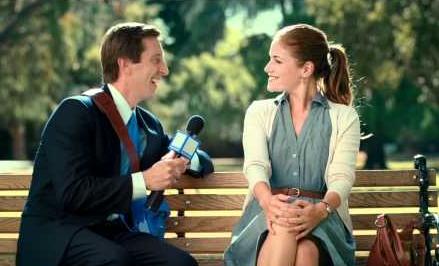 be quite funny, but ultimately not sustainable like the little Gecko guy. Farmers recruited the actor J.K. Simmons to guide us through the courses at Farmers University. Some of these spots have been pretty good because J.K. Simmons is pretty good.
Don't surprised to see even more dull and stuffy insurance companies going the comedy channel route in the future. Me, I personally don't use any of these companies as the choices we have as insurance consumers is legion. This super competition keeps the rates low and that is good thing. I for one don't mind quick, funny little commercials, it's when 14-15 of them get shoved into a 3 minute space that gets me spitting at the TV.
CW
Saturday, January 15, 2011
REVIEW: Decision Points

Decision Points is George W. Bush's memoir. In it he highlights major decisions he faced as President. It is not a chronological look at his two terms in office. His was a consequential presidency on many levels, good and bad and I suspect this format served him well as he recounted his days in the White House.
Overall I didn't find anything revelatory in the book. Most of the subjects and his positions on them were well known and were endlessly hashed out in the public discourse at the time. This to me was a little disappointing. I had hoped for more, I guess.
There's little point in recounting the "decision points" chapter and verse here since we all lived through them. What I can do is give an impression. I had supported President Bush, voted for him twice. I definitely bonded with him in the aftermath of 9/11. I was ultimately disappointed with his presidency on the whole, but I continue to like the man.
The one thing that becomes clear in Decision Points, and its no small thing, is that Bush is a very thoughtful man. He is neither the evil genius nor the blithering dunce he was alternately portrayed as in the hostile media. President Bush was acutely aware that his job was to make decisions on difficult and consequential matters. He took the job very seriously and not with some cliched shooting from the hip cowboy style.
Bush was profoundly affected by the events of 9/11 as you would imagine. Protecting the country from further attack became the central tenant of his presidency. In his every waking moment and I suspect even in his dreams he was waging a war on terrorism. Obviously this overshadowed everything else and the consequences of the actions the administration took to protect the nation cluttered everything inside the White House as well as inside the newsrooms.
The cacophony of dissent once the immediate shock of 9/11 wore off colored every single topic and poisoned the airwaves and headlines for the remainder of his term. He was determined to proceed on the course he had chosen, knowing quite well that it was going to have to be historians fifty years hence that would have final judgment on the decisions he made - including invading Iraq and taking out Saddam Hussein.
The other thing that come out in this memoir was that Bush did not hate his critics, he actually understood their vitriol. Much to the chagrin of his supporters he did not lash out at his attackers or defend himself from the scurrilous lies. This attitude I suspect was deep in his Texas heart and it was not in his nature to feel the need to defend his own honor. Did it serve him well? It's hard to say. Letting your worse critics define you without correcting the record now and then is a tough bet.
Even in his private life he continues to turn the other cheek. He is respecting a time honored tradition that former Presidents shall not criticize their successor - even as he endures his successor trashing his presidency at every turn. There is not one negative reference to President Obama or even President Clinton is this book. He makes it clear that in a 235 year old nation of hundreds of millions people that less than 50 men stood where he stood. Only a few people have ever had that unique understanding of what it took to be President of the United States. He is not about to make President Obama's job harder.
Decision Points was worth reading, but it probably won't change anyone's mind about the man or the President. I came away with the impression that Bush is an intelligent, thoughtful, honorable and yes, also a stubborn man. He made big decisions, some right, some wrong. He admits his mistakes openly and explains (rather than defends) the things he believes he got right.
CW
Friday, September 14, 2007
REVIEW: Six Feet Under

My wife and I just finished watching the entire run of the HBO series "Six Feet Under". After failing to find any movies worthy of our $4 at the local video outlet we grabbed disk 1, season 1 and went for a ride in a lime green hearse with Fisher & Sons.
With excellent writing and fine acting punctuated by sometimes outlandish scenarios HBO's original series Six Feet Under proved to be an engrossing DVD experience. The opening scene of each episode gave us a glimpse of the moment of death, and the subtext for the episode ahead. From the woman dying Elvis-style, quietly sitting on the toilet to a man trying to rescue strangers stranded in an elevator stuck between floors... Well the elevator started moving and you can imagine what happen to him. Death is part of life and that is what this show examines in mortifying detail!
Nathaniel Fisher (played by veteran actor Richard Jenkins) owns and operates a suburban Los Angeles funeral home called Fisher and Sons. In episode one Nathaniel is killed by a bus. He may have died but he was not going anywhere. The ghost of Nathaniel Fisher pervaded everything and everyone, leaving an imprint that set the undercurrent in motion that carried the show through five turbulent seasons.
Nate (played by Peter Krause) is the flaky and self centered first born who runs away from his life in order to avoid intimacy at all costs. He is a dog, a male whore if you will. He is handsome and fit and uses his animal attraction to put his male member in as many women as possible. He is also uniquely gifted in the ability to empathize with and comfort those around him. I found this character intriguing and off putting all at once.
His younger brother David (played by Michael C. Hall) was not Nate in any way. His lack of confidence and his repressed homosexuality stunted him in every way. Only the death of his father let him face the world as he really was. Still, only in the last episode did he face down his own demon that allowed him to finally accept himself.
In season 4 in and episode called "That's My Dog" David faces his own mortality in a way that haunts him for the rest of his life. After having been carjacked and kidnapped by a drifter who pretends to befriend him, David finds himself bloody, beaten and doused with gasoline facing a lunatic with a gun in one hand and a lighter in another asking him which way he preferred to die. I must say it was a very uncomfortable thing to watch.
Claire the young sister was a lost soul who spent the entire series trying to find her identity in drugs and dangerous relationships. Hers was a childhood left incomplete by a father she hardly knew - even when he was alive - and a mother who had checked out on reality sometime in the 70's. She never really knew Nate who had left home when she was a preteen. Played by actress Lauren Ambrose, Claire was perhaps the most interesting and convincing character. That could be because I was so often reminded of my own barely adult daughter. Attitude. That's all I'll say.
The mother Ruth, (played by Frances Conroy) had lost herself in her children many years ago - like so many mothers of the time. She didn't always have a grip on reality as it presented itself in the dawn of the 21st century. She lost her husband Nathaniel long before he died. She was hot tempered and irrational on one side of the coin, and sweet, caring and compassionate on the other. She was also prone to torrid, impulsive affairs with very flawed men.
These five characters made up the center of the circle but it was by no means complete without an all star cast of guest stars, regulars and cameos. Federico Diaz, the Fishers partner and a first class restorative artist was excellently acted by Freddy Rodriguez. Rico, as he was called, took extreme pride and care preparing the deceased for a showing. The show was praised for its accuracy in depicting the mortuary business.
There was Brenda Chenowith (Rachel Griffiths) - a neurotic, erotic, sex addict with a near genius intellect who falls hard for Nate in episode one and begins a five year love-hate relationship with a man who can't really ever know intimacy. Her entire neurotic family drift in and out of series.
Keith was David's lover and was also convincingly acted by Mathew St. Patrick. A hot tempered passionate man with more common sense than anyone else in the show. He was the most normal (least screwed up) character on the show.
The list of guest stars - and I mean stars - is impressive. The show obviously attracted "A" list talent in Hollywood. Veteran character actor James Cromwell (George, Ruth's 2nd husband) was a delight. Kathy Bates of "Misery" fame, makes frequent appearances. Joanna Cassidy (Margaret Chenowith, Brenda's mother) is a crazy - and I mean crazy - psychotherapist. Mena Suvari (Edie, Claire's obsession) lights up the screen with beauty and open, lusty sexuality.
I can't praise this show enough for its fine acting, excellent writing and profound dive into the subject of death in a way we've never seen before - I really, really liked it, but...
The show's shallow political correctness was annoying. It was obvious by the occasional contemporary political commentary the writers are true Hollywood liberals and can't fathom the likes of conservatives and Christians with out devolving into complete caricatures. (The priest at their church was, of course, a closet homosexual). All the cliches about evangelical types and all the environmental pablum was on full display whenever such subjects arose. Adultery and elicit homosexual sex was the norm. Incest was hinted more than once. Polygamy was explored. Well, just about everything about sex and drugs was examined endlessly.
It seems nothing was left unexamined except the normal family where a man and his wife love each other, practice monogamy, love God and their country and their children aren't creeps. In fact, in the eyes of the writers the above mentioned are the freaks!
Strangely, I never got a warm and fuzzy Christian overture from the show but still the background screen on the main menu of every DVD depicted a Christian cross prominently (a Catholic rosary no less). This, I didn't understand.
At the very end of the series, in the last few episodes actually, they introduced a new character into Claire's life. Ted was a corporate lawyer who loved Christian music, voted for George W. Bush twice and supported the war in Iraq. I completely expected this character to be exposed as the devil himself before the show closed. Surprise! Ted turned out to be the sweetest, most caring person Claire Fisher had ever known. She detested all the things he stood for and believed in but she fell in love with the person. He was the most genuine character on the show. I can only say that I was pleasantly surprised and heartened.
I do recommend this show, it was well worth the time and the money. These characters will stay with me for years to come. That is the measure of good story telling, and what a story the Fishers have to tell.
CW
Sunday, July 15, 2007
REVIEW: Shooter (movie) Point of Impact (book)

First off the book is a genuine 5 star effort by Stephen Hunter. Everyone I have talked to who read the book just loves Bob the Nailer. Bobby Lee Swagger is an ex-military sniper who was the best in the game. Wounded and destined for a life in pain he retreats to the hills to live quietly and alone but for a loyal dog and his arsenal of guns. When a secret quasi-government agency employs a profiler to find the right man for a set-up of epic proportion Swagger unwittingly takes the bait.
"Point of Impact" is a gripping page turner with a great sense of pacing and just enough (relevant) plot lines to keep it interesting without burdening the reader with fluff and filler.
I didn't get the sense that the author was trying to make any deep personal political statements via the hero, Bobby Lee Swagger. Using a tried and true plot point of the secret out of control entity tied to the shadow government as the primary villain was just good fun. In fact, it is one of the rare novels with which I haven't any quibbles - at all. It comes highly recommended by yours truly and hundreds of reviewers at Amazon.com where it received a unequivocal 5 star rating!

The movie version, which was renamed "Shooter" (probably as not to confuse audiences with a title that could be construed as a Steven Segal flick) gets an A for effort and a D for execution. The screenplay tried valiantly to touch on the most important plot points. Unfortunately the movie failed more often than not to convey the true nature of Bob the Nailer, and frankly, all the other characters too. Wahlberg is a decent enough actor but was badly miscast - or simply failed to capture the calm and grace of Swagger as written in the book. Danny Glover, who stinks in anything without Mel Gibson, was just terrible as the principal antagonist.
This movie deserved to be a long 3 hour epic instead of the typical bang, bang action thriller. This is not to say the novel wasn't an action thriller, it was. But it was anything but typical.
If you don't read the book and see this movie please don't let that convince you that Bob the Nailer is just another action hero. Swagger is a complex character who could have been a bitter man, but never lost the sense of his place in the big picture when he chose to simply fade away. The one thing you should take away from the movie and the book is that you don't want to mess with a man like Bob the Nailer!
CW
Subscribe to:
Posts (Atom)